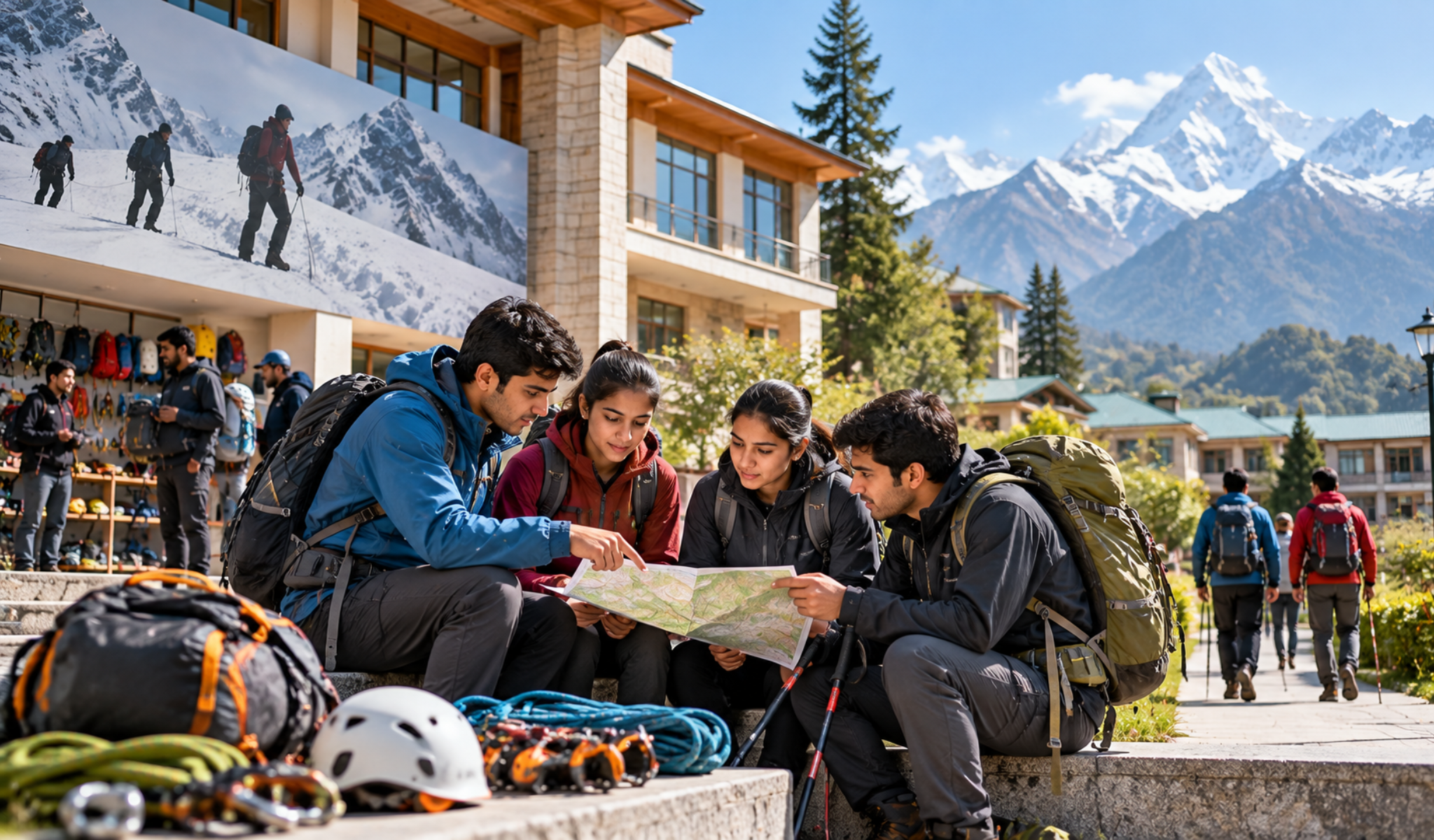
If you want to climb peaks, traverse high-altitude terrain, and learn the mountain skills for real, then going to the best mountaineering institutes in India is a significant first step. India boasts several certified training centres that teach beginners and experienced climbers everything from basic rope techniques to more advanced snow & ice climbing.
The right institute will enhance your physical endurance, introduce you to technical skills, and give you self-confidence in high-risk environments. Both registration and school selection are important before applying, as it is better to compare course structure, proximity, short training duration, and eligibility exams free of cost, along with a fair place.
Quick Summary
- There are some institutions already existing in the country which impart formal training for mountaineering.
- For normal courses, these are good for people of general fitness.
- To qualify for advanced programmes, candidates would normally need to first successfully complete a basic mountaineering course.
- Rock climbing, snow craft, ice craft, ice climbing, navigation, as well as rescue techniques and expedition planning may be components of training.
- Prior to applying, always confirm the updated course schedule and whether there are any medical requirements.
Why Choose Professional Mountaineering Training?
Climbing is way more than brute force. Climbers must also know weather, terrain, equipment, and gear placement, along with navigation skills like good rope system positioning.
Professional training offers supervised hands-on experience that would be hard to achieve on your own, without risk. In addition, multiple schedules combine classroom education with outdoor training, enabling members to explore their understanding.
Another key area for beginners is gaining clarity and structure on mountain safety, which a course can provide in the context of responsible climbing.
Popular Mountaineering Institutes in India
Some institutions have a goliath reputation for formal mountaineering education and adventure training.
Nehru Institute of Mountaineering, Uttarkashi
The Nehru Institute of Mountaineering (NIM) at Uttarkashi, Uttarakhand, conducts Basic and Advanced Mountaineering Courses, respectively, as well as search & rescue, Methods of Instruction courses, and skiing adventure programs. While the Indian Mountaineering Foundation (IMF) has a basic mountaineering course of 28 days and an advanced course targeted towards candidates who have successfully completed the basic level, NIM says that
Himalayan Mountaineering Institute, Darjeeling
Another popular option is the Himalayan Mountaineering Institute (HMI) Darjeeling. The programmes include basic and advanced mountaineering, search and rescue instructor training, and expeditions. The present HMI admission information mentions that basic and advanced courses have an age limit of 17-45, though requirements differ according to the programme.
Atal Bihari Vajpayee Institute of Mountaineering and Allied Sports
Located in Manali, Himachal Pradesh, ABVIMAS is known for mountaineering and allied adventure training. It is also among the recognised institutions whose Basic Mountaineering Course qualifications are accepted for advanced training at institutes such as HMI and NIM.
Jawahar Institute of Mountaineering
Another approved training centre is the Jawahar Institute of Mountaineering in Pahalgam, Jammu and Kashmir. It bears the distinction of being listed among institutes accredited for furthering advanced mountaineering training at HMI and other premier establishments.
Other Training Centres to Consider
You can also go for institutions like the National Institute of Mountaineering and Allied Sports (NIMAS) in Dirang, among other recognised adventure-training centres depending on your aim. You can determine a programme that matches your experience level by comparing their course schedules and eligibility criteria.
What Do Mountaineering Courses in India Cover?
Mountaineering courses in India have an elementary syllabus depending on the degree of instruction:
- Rock and basic climbing techniques
- Snow and ice craft
- Rope handling and climbing equipment
- Mountain navigation and map reading
- Weather and mountain safety
- First aid and emergency procedures
- Camping and high-altitude techniques
- Search and rescue methods
- Expedition planning
More difficult climbing techniques and expedition-oriented training are offered in the advanced programmes.
Mountaineering Course Eligibility: What Should You Know?
Eligibility to write a mountaineering course differs between institutes and programmes. Standard entry-level courses generally also specify minimum age, fitness, and medical standards. Additionally, a few institutes require a medical certificate, etc.
Advanced courses usually require you to do more. HMI and NIM have guidelines that say that a relevant basic mountaineering course qualification, often with a minimum grade, is usually required before you progress to further training.
Never read the old eligibility and check it through current admission entry.
Practical Comparison of Mountaineering Institutes