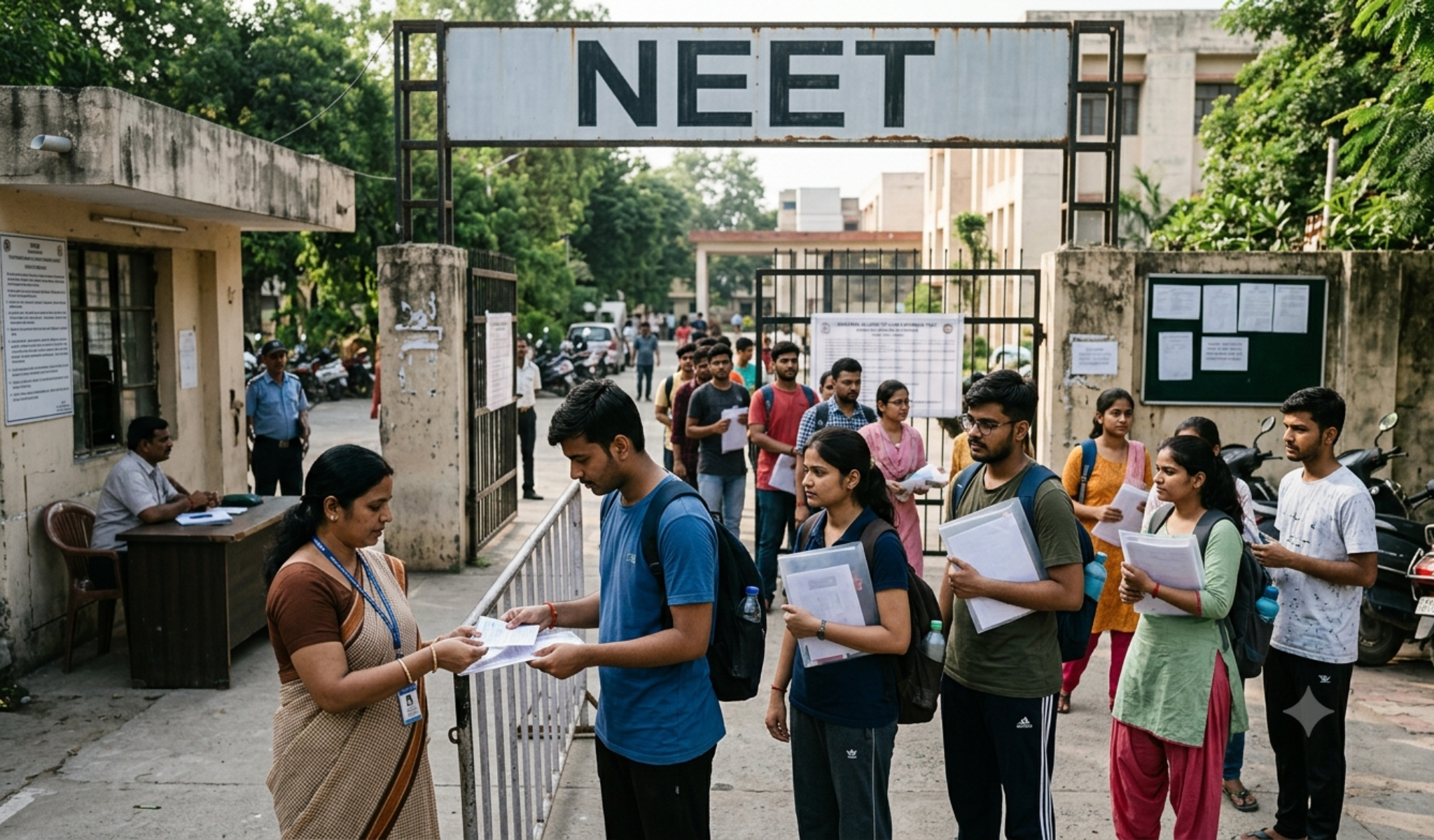
NEET, therefore, is not only an entrance exam for many students in India but also the first step towards a profession in medicine. Here is all the information you need to know about NEET eligibility criteria before filling out the application. This information is relevant whether you are currently in class 12, have passed class 12, or are preparing for another attempt.
NEET UG is held for admission in the undergraduate medical and allied courses across India. But who can actually apply? What are the subjects required in Class 12? Is there an age limit? Is it possible for students who have already cleared their Class 12 to take the NEET exam?
We can go into more detail and legal terminology later; for now, let's examine the primary eligibility criteria in straightforward language.
What Is NEET?
National Eligibility cum Entrance Test for UG or NEET-UG is a national-level entrance test conducted in India that facilitates admission to undergraduate medical courses. NEET: Students wishing to apply for courses like MBBS and BDS usually need to qualify for NEET (as per the admission rules).
The National Testing Agency (NTA) is conducting the exam and admission, counselling will be conducted by respective authorities.
Since NEET is a competitive exam, students interested in taking up serious preparation must know about the eligibility criteria and also have an understanding of both the syllabus & pattern for NEET.
NEET Eligibility: Who Can Apply?
Although there are several eligibility criteria, the basic NEET qualification mainly concerns the age limit and academic background regarding the subjects taken in Class 12.
Educational Qualification
The candidate is required to have completed Class 12 or its equivalent from a recognised board.
Students appearing for the Class 12 examination in the same year as NEET can also apply, but they must fulfil the required eligibility conditions for admission by the prescribed date.
This means that you do not need to wait for your Class 12 results before filling out the NEET application.
Required Subjects in Class 12
Candidates are expected to have studied the pertinent science disciplines at the criteria assessment.
The key subjects are:
- Physics
- Chemistry
- Biology/Biotechnology
- English
Physics, chemistry and biology/biotechnology are more significant, as they lay the academic foundation for NEET preparation.
It is wise to verify the most recent official eligibility criteria before submitting an application when you have these topics in Class 12.
Age Requirement
Age Limit: Candidates appearing for NEET must cautiously verify the age limit in information bulletins of that specific academic year.
For the 2026 admission rules, NMC's published information says the candidate must have completed 17 years on or before 31 December of the year of admission.
Thus, if you are a student intending to check the age limit for candidates planning their maiden attempt, it is wise to refer to its most recent NTA notification.
Can NEET be given after Class 12?
Yes, Class 12 students can take NEET if they meet the eligibility criteria.
This is especially helpful for students who are currently working on their board examinations in parallel to NEET preparation.
But qualifying NEET and admission are two different processes. In addition to these requirements, a student must also fulfil the eligibility criteria for the course and the counselling process.
Can a candidate who has already passed Class 12 apply?
Yes. NEET is a common entrance exam for students who have completed Class 12 or an equivalent level qualification.
The exam allows students to retake it if they wish to improve their performance or seek admission to medical school after previously applying.
Preparing for NEET Again: students repeat the attempt, but it is essential to have a clear study plan rather than simply following the same approach as before. You need to have a clear study plan and not just follow the same way as before.
NEET Exam Pattern And NEET Syllabus
The NEET syllabus & pattern are equally important as checking the eligibility.
NEET Preparation: The NEET examination is primarily based on the syllabi covered at the senior secondary level in physics, chemistry and biology. Biology includes botany and zoology.
The exam is based on multiple-choice questions, and students should balance their time by attempting questions related to all three subjects.
Since examination patterns may change, the exact number of questions, marking scheme and duration should always be checked in the latest information bulletin released by the NEET official conducting body.
A student should know the syllabus first, mark important chapters and then make a timetable covering all concepts and revision as well as practice tests.
What About Students From Other Boards?
Students from Indian education boards are eligible to sit through NEET as long as they incur the qualifying parameters.
Your CBSE, state board or another recognised board is not relevant thereafter, but your Class 12 subjects and qualifications should fulfil the official NEET eligibility criteria.
Different educational boards may have varying textbook structures; however, the NEET syllabus provides a fundamental foundation for effective preparation.
Do the (foreign) students apply for
NEET eligibility is not restricted to students studying in India. Note: Some categories of foreign nationals, Overseas Citizens of India (OCI), Non-Resident Indians (NRIs) and other candidates may be eligible in accordance with the laws.
But certain coursework or admission criteria may still apply, depending on the nationality of a student and the class or institution.
Hence, students must go through the latest official notifications and counselling guidelines before applying in these categories.
Meeting the eligibility requirements is just one requirement.
Fulfilment of NEET eligibility criteria enables you to take the exam; it does not guarantee your admission into a medical college.
Post NEET qualification, a candidate has to go through the respective counselling process and clear all criteria for their desired course and institution. Admission is based on NEET rank, category, availability of seats and counselling rules or any other applicable criteria.
Thus, students must view eligibility as the starting point of their medical admission journey.
Final Thoughts
Preparing for NEET is indeed challenging, especially when balancing school, board exams, and entrance test preparation simultaneously. Understanding the eligibility criteria beforehand can help avoid unnecessary confusion and allow you to focus your time and energy on effective NEET preparation.
Please check the title and eligibility criteria in the latest NEET notification to ensure they align with your qualifications. The eligibility criteria include age limits, Class 12 subjects, and other requirements. Study the NEET syllabus and pattern to stay on track for the exam.
The first question that each NEET aspirant asks is, "Am I on the right track?" and "Where are you?" After that is settled, next up is establishing a consistent preparation plan and working toward your goals in the medical field.
FAQ’s
1. Who is eligible to apply for NEET in India?
Students who meet the required age, educational qualification and Class 12 subject criteria can apply for NEET, subject to the latest official rules.
2. What subjects are required for NEET eligibility?
Candidates generally need to study Physics, Chemistry, Biology/Biotechnology and English in their qualifying examination.
3. Can Class 12 students appear for NEET?
Yes. Students appearing for Class 12 can apply for NEET, provided they fulfil the prescribed eligibility requirements.
4. Is there an age limit for NEET?
NEET has a minimum age requirement. Candidates should check the latest official NEET notification for the applicable age criteria and cut-off date.
5. What is included in the NEET syllabus and pattern?
The NEET syllabus primarily covers Physics, Chemistry and Biology from the senior secondary curriculum. The exam uses objective-type questions, with the exact pattern and marking scheme specified in the latest official notification.