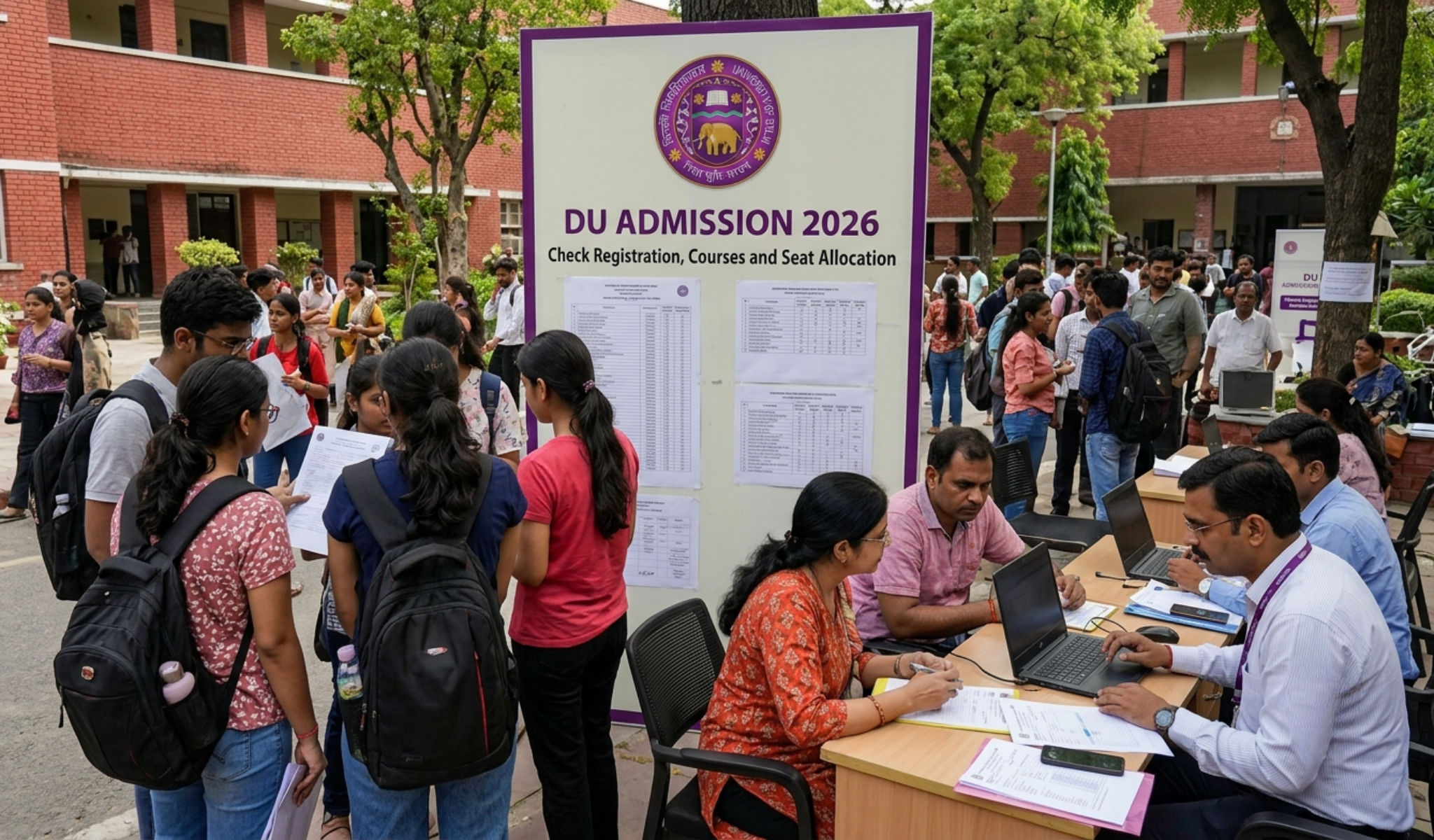
Delhi University admission is an important milestone for students who are planning to pursue undergraduate or postgraduate studies at one of the leading universities in India. With a broad spectrum of courses, renowned colleges and competitive entry requirements, knowing the admission process can help applicants make informed decisions for the 2026 academic session.
For undergraduate courses, admission is generally based on the Common University Entrance Test (CUET-UG) followed by the university’s centralised admission and seat-allocation process. Candidates should refer to the official notifications to know about eligibility criteria, closing dates for registration, preferred course options, and rules for merit-based allotment before applying.
Quick Summary
- Admission route: Undergraduate admissions generally use CUET-UG scores and the university's centralised allocation system.
- Popular courses: BA (Hons), BCom (Hons), BSc (Hons), Economics, English and Computer Science.
- Eligibility: Requirements vary by course, including qualifying subjects and minimum marks where applicable.
- Cut-offs: Selection depends on factors such as CUET performance, course preferences, category, and seat availability.
- Seat allocation: Candidates must follow the official counselling schedule, accept allocated seats, and complete verification and fee payment within the deadline.
Delhi University Admission 2026: Courses, Eligibility and Process
Delhi University offers undergraduate and postgraduate programs in Arts, Commerce, Science, Humanities, Social Sciences, and other disciplines. There is a right way, based on your academic background, entrance test performance, and career goals.
Popular Courses to Consider
Some commonly sought-after options include:
- BA (Hons): English, economics, political science, history and psychology, subject to availability.
- BCom and BCom (Hons): Suitable for students interested in accounting, finance, business and commerce.
- BSc and BSc (Hons): Options include mathematics, physics, chemistry, computer science and life sciences.
- Professional programmes: Selected colleges offer specialised courses with their own eligibility and admission conditions.
- Check the official course list for 2026, as programme availability and subject combinations can vary between colleges.
Delhi University Eligibility Criteria
The eligibility criteria of Delhi University depend on the programme you select. For most of the UG courses, the candidate must have passed Class 12 from a recognised board and should fulfill the relevant CUET subject requirements.
Before applying, make sure you:
- Review the eligibility conditions for your preferred course.
- Check whether your Class 12 subjects match the required CUET subjects.
- Confirm any programme-specific minimum marks or additional requirements.
- Review category-related provisions and document requirements, where applicable.
- Do not assume that meeting the general Class 12 requirement guarantees eligibility for every course.
Delhi University Admission Process: Step-by-Step Guide
Understanding the Delhi University admission process early can help you avoid missed deadlines and incorrect applications.
Step 1: Complete CUET Registration
For admission to undergraduate programs, apply for CUET-UG on the official examination portal once the application process starts. Check the requirements of your desired programs and choose the appropriate subjects.
Step 2: Fill in the Delhi University Application Form
Visit the official website of the university to access its undergraduate admission & seat allotment portal. Fill the Delhi University application form, enter the correct personal and academic details, and upload the required documents.
The university may conduct a separate registration and preference-filling process after CUET. Forget the schedule from previous years, just follow the 2026 instructions.
Step 3: Enter Course and College Preferences
Make a realistic list of preferred courses and institutions. Check the academic interests, previous admission trends, location, fees, and future career plans. Please rank your preferences carefully, as the order of submission may affect allocation outcomes under the applicable rules.
Step 4: Check Allocation Results
Once the allocation rounds begin, log in to the official portal to view your result. If you receive a seat, follow the instructions to accept it, complete document verification, and pay the admission fee before the deadline.
Delhi University Admission Through CUET: Understanding Cut-Offs
Admission to Delhi University through CUET depends essentially on the entrance-test performance and the admission rules specific to the program. Selection can differ widely across courses, colleges, and applicant categories as opposed to a single university-wide cut-off.
The university’s official allocation system and published admission rules should be considered the final authority. The scores from previous years’ cut-offs can be a useful guide to the competition, but they are no guarantee of a similar outcome in 2026.
What Influences Cut-Offs and Merit?
Several factors can affect your admission prospects:
- CUET score: A stronger score can improve your competitiveness for popular programmes.
- Course demand: High-demand courses and colleges may attract more applicants.
- Seat availability: The number of seats and the preferences submitted influence allocation.
- Category and eligibility: Applicable reservation rules and programme-specific conditions affect consideration.
- Preference order: Your submitted choices and the university's allocation rules determine which eligible option may be offered.
- Use previous-year data as a planning guide, not as a confirmed 2026 cut-off.
Seat Allocation, Acceptance and Upgradation
Allocation of seats is an important step in the admission journey. Candidates are advised to check the portal regularly and follow every instruction within the stipulated time period after the announcement of an allocation.
Rules can allow students to choose an upgrade or retain an assigned seat. Please read the conditions carefully before you take a decision. If you miss an acceptance deadline or don’t complete verification, you risk losing the offer.
Keep scanned and physical copies of your Class 10 and Class 12 certificates, CUET details, identity proof, photographs, and any category or other supporting documents required for your application.
Practical Information Table